Small steps in workplace democracy and better Work
Work can be miserable but we shouldn't get Doomerpilled

Leftists are some of the most passionate people in politics but also fucking braindead. We often argue and bicker about stupid pointless solutions to problems that we mostly agree upon. Yet we still have a massive opportunity to take small steps to solving one of the biggest problems of our time, work. Even the right is now joining us on our dislike for the current conditions of work and capitalism. In America a new poll found that 25% of Republicans don't support capitalism and even more so amongst the young and especially democrats. Although this is also accompanied by a likely misunderstanding of Capitalism, Socialism and Marxism (just look at Fox news for fucks sake) what is undeniable, is that anger at modern work and the economic system is here and with the current laws and structures in place that is unlikely to change.

Consistent polling has shown people are scared of being dropped off by the current system and angry at the work they do, feeling alienated from the direction of their economic and social life. This issue transcends political party, race, geography, nation and voter coalitions. This isn’t just an American or British phenomenon, it is a capitalist one. Countries like Japan have seen huge problems with birth rates, mental health and a whole range of social policies as the harsh conditions of work stop the young finding meaningful fulfilment and relationships. This overworking and poor conditions, along with little to no immigration has caused a massive labour shortage, stopping businesses from working at full capacity and increasing economic output, often leading to people working longer and more hideous hours to churn out slim profits or to even survive, causing a vicious economic cycle where CEO and board room interests of higher output and profit conflict with a work life balance of workers and society at large, hurting everyone in the long run.
I could write article after article about how each capitalist country is experiencing similar issues with alienation and a crushing work life balance, tipped in favour of profit. So then what comes next? Solutions obviously, but the forms these solutions take varies massively, even among leftists. We can easily recognise the problems but solutions are more difficult.
Revolution isn’t gonna happen any time soon in a modern developed western democracy. Its not popular or militarily feasible. The IRA was hugely popular and had money, weapons and logistical support and was still not able to kick the Brits out of Northern Ireland during the troubles and unlike modern “revolutionaries” they get adequate amounts of vitamin D and were mostly above the age of 14 and combat experience didn’t come from COD but firing weapons and learning how to make petrol bombs. Cooperatives have been proposed and have been proven to be effective, especially on local levels and for small businesses but we do not have the political capital to make them feasible in most Western countries and unions aren’t able to force businesses into full worker ownership, especially with capital interests at their throat. State ownership isn’t popular in most of the private sector either and shows little sign of working for consumer goods based industries as it stands, even if it was electorally possible.
For socialists and the broader left this creates multiple problems. Some have decided to attempt to “leverage their vote” and not vote for any party that supports huge reforms at all, ironically in most cases helping the more status quo party. But when they say “leverage their vote” they really just mean that they want to keep the winning party in power and sit on their arse complaining how bad things are on the internet but without doing the most important electorally significant action. But this idea that we have to choose between doing good and improving peoples lives and being pragmatic and getting stuff done, just because it isn’t perfect is frankly bullshit. There are plenty of worker friendly and left wing policies that have support and we can utilise the public dissatisfaction with modern work to get things done and improve peoples lives in small steps to socialism and workplace democracy.
Worker Board Rooms
Worker Board rooms are pretty simple to understand. Worker Board representation refers to the right of workers to vote for representatives on a board of directors or be apart of the board rooms themselves. This benefits workers and the company in multiple ways. In a more direct way it allows workers to push forward their interests to the board, keeping wages high and workplace conditions good. It helps guard against economic inequality as it is harder for CEOs to horde large amounts of money as workers are better able to hold them to account. It encourages better relations between workers and employees which has been proven to reduce unemployment and helps strengthen a companies ability to survive during recessions which many have pointed to as the reason Germany a country with a very high worker representation was able to maintain relatively low unemployment figures during the 2008 financial crisis. Workers can better hold their firm and CEO’s to account when adequately represented, improving the company and making it more productive. Worker Board Representation can take many forms, the German model has a dual system where they sit on the advisory board, giving them a large say in decisions and an opportunity for workers to collaborate with Unions. As a policy its fair, better for workers and is popular, even Theresea May showed support for it (although she did fuck all to implement it). Unions would likely be supportive of the policy as well. It may not be perfect but it is a broadly popular policy that legally would not be difficult to implement and could likely have support from a broad coalition of left wing parties from the SDLP, Lib-Dems and Labour (maybe even the fake leftists at the SNP). This would be especially easy to implement in state owned companies and will improve workers lives and the economy.
here’s a good video on the matter:
It shouldn’t be seen as a replacement for worker democracy but merely a step in the right direction for a fairer workplace.
Workplace Surveys
Another easier policy to institute would be a mandatory survey of workers for all companies to publish that would detail their opinions of their work. It would be anonymous and could either be done during the census or on a yearly basis and if workplaces get low scores or some such they can be investigated by authorities or face other repercussions and could be targeted by unions. A similar system is in place in Scandinavian countries where they inspect things like amount of work, free time, pressure, emotional being, workplace culture and harassment and the fairness of work requirements. This system could put pressure on employers to improve workplace conditions and create a system where firms are forced to compete on quality of work in a more meaningful way then they’re now. Unions could also use this information for organising and applying pressure or galvanising their members into action. Using the BBC, the government could publish the results in a name and shame tactic that could hit a company in the PR balls and force them to improve their workplace.
End Fire and Rehire
Fire and Rehire is an employment practice where employs fire their workers only to use their leverage and power to re-employ them on worse terms, such as pay, hours, conditions and other workplace benefits. Its an immoral practice used by several companies including but not limited to British Airways, Go North West, Tesco and British Gas. The excuse is often made that it is necessary for struggling firms to do it in order to keep costs low. Little evidence has been provided to substantiate these claims. However, even if it was, better relations and communications between workers and the boardroom could help solve this issue by all workers agreeing to reduce pay in order to not put the worst conditions on the most vulnerable (as they are often targeted as they don’t have the ability to find another job, so employers know they will take the new worse contract). This policy could be passed with a simple law and has the backing of the general public. Yet another simple policy that is popular that will improve peoples lives.
Higher Unionisation
Union membership has fallen massively since the 70s as well as stricter regulations on strikes, joining and forming a union and picketing have been put in place. At the same time, especially since the pandemic when unions have helped insure workers are safe at work, public support for unions has increased, especially in America (polling in the UK is non existent on this issue).
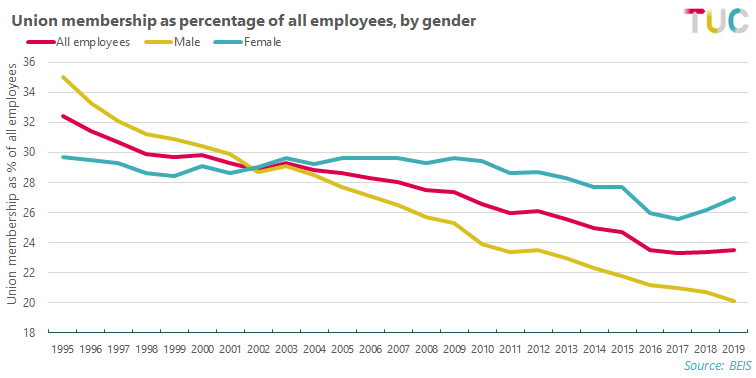
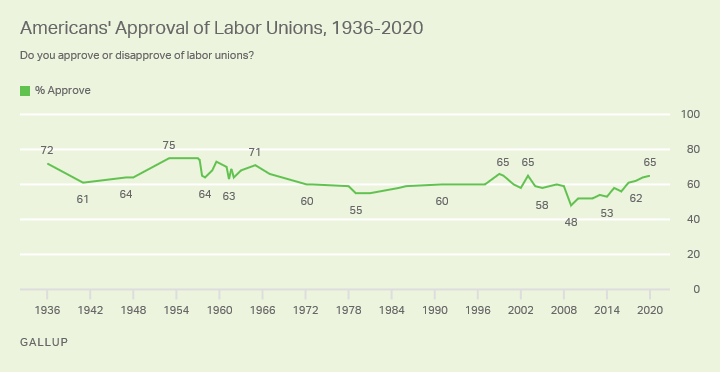
Given this, it is feasible that the government could be able to increase union membership through a variety of soft and hard policies.
The Government could make union membership mandatory in certain industries ( bringing it back to the polling on wellbeing, membership could be mandatory for businesses that score poorly). We could also loosen laws on strikes and picketing and bring harsher penalties for businesses that attempt to break up unions or unionisation efforts.
Partial Worker Ownership and Promoting Cooperatives
Worker ownership in businesses has become more popular in recent years with many small scale cooperatives being set up in the UK. It is estimated that over 400 worker owned and controlled cooperatives are in the UK. Although it would be politically impossible to force businesses with the current shareholder model into full worker ownership there are things that we can do to incentivise or create some form of worker ownership. Tax breaks and subsidies for worker cooperatives could be a start helping them get off the ground and compete with traditional firms who can raise capital through selling shares.
Another idea would be that workers are entitled to own a certain % of a company. For example 20% may be set aside to workers while the rest can be left up to CEOs and shareholders. This would allow workers to have a greater say in the company, collect dividends, benefit from the success of the business and create more worker control and sense of fulfilment in the company while also being far more politically possible and a small step in the right direction. Although not really tried yet and polling is scarce, giving workers a small taste of worker ownership is likely to lead to positive experiences and can show on a larger scale its effectiveness at dealing with the problems of modern work.
4 Day Working Week or Flexible Hours?
This one is a little more out there but the tide is turning inn this direction. 100 years ago Henry Ford was laughed at for believing that car manufactures would work a 5 day week, now it is the norm. Keynes even predicted that workers would only work 15 hours per week at some point in the distant future. 4 day working weeks have been tried in various places around the world and by various firms.
It has been proven to boost productivity and also have several mental health benefits as people have more free time and are able to peruse hobbies and rest. It will also allow parents of young children to more easily look after and raise their child, improving child development and lowering the cost of raising a child.
More flexible hours could be a more realistic possible future where by law workers could be entitled to choose when they can work a certain amount of hours and or unions could be given more powers by law to effectively negotiate hours with companies. The possibilities and the directions working hour policies can take are pretty broad and may not suit every firm, but what is undeniable is that it is getting more popular and politically feasible.
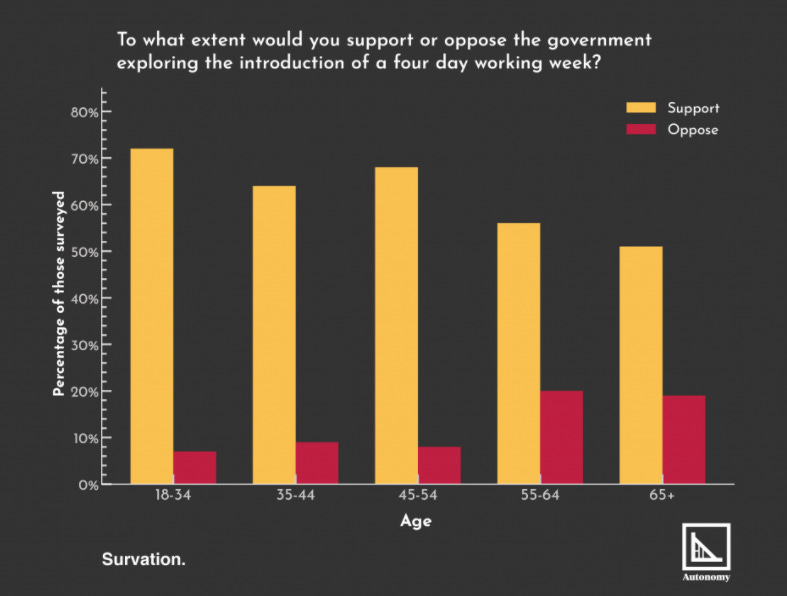
The policy shows some high support in several demographics so it may become more politically feasible in the future and or alternatives that are worker friendly.
Close the Ratio Between CEO Pay and Average Worker Pay
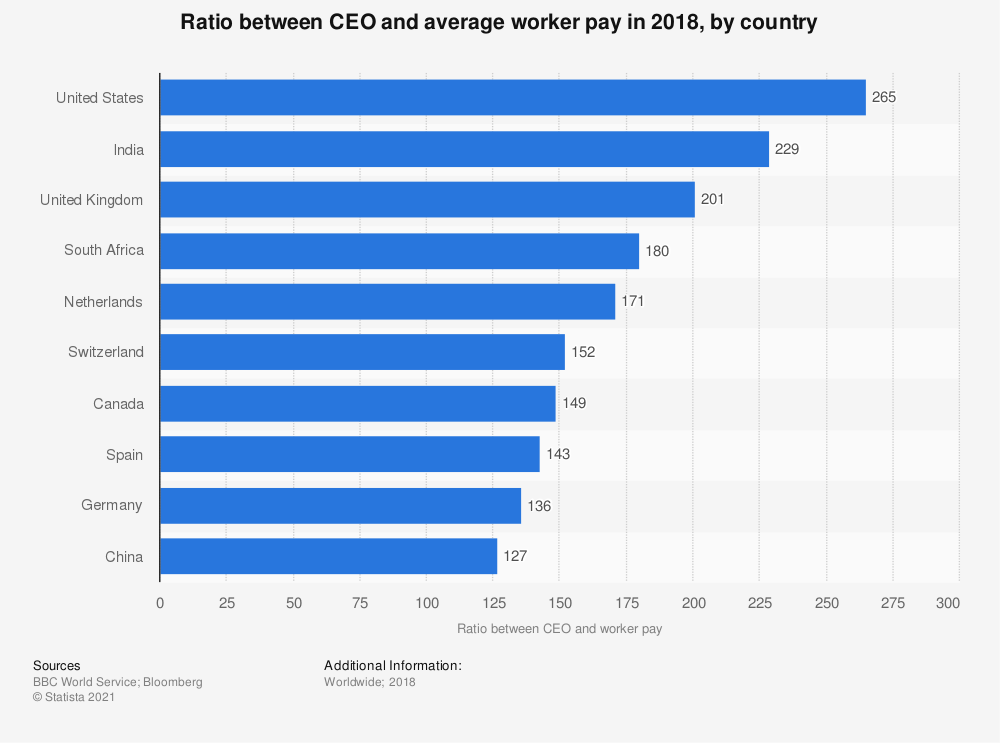
The explosion in the disparity between CEO pay and the average workers pay is both undeniable and unpopular. A use of populist rhetoric with pragmatic policies could be used to reign it in and close the huge gap between them.
The most obvious answer is some form of tax. Some to incentivise the reduction in the ratio of CEO to average worker for example a tax that rises when the CEO to average worker pay ratio increases and the tax rate falls when the opposite occurs. This way businesses are incentivised to reduce the ratio.
The other method is what we have previously discussed, give workers a greater say in their business life. This could be through a number of policies already discussed but its important that shareholders , workers and or unions are empowered enough to be able to help dictate the ratio of CEO to average worker pay.
Don’t get Doomerpilled
Pragmatic campaigning and action can result in reasonable and reliable change. In the scope of human history it wasn’t so long ago that children’s dignity, health and livelihood was stolen for profit in cruel working conditions. Dissatisfaction with work and the economic system is strong and eventually that anger will be transferred into something and it has been shown that it can be channelled into positive change and there is no reason we cant do it again. Its up to socialists, activists, union leaders and the broader left to create both small and large changes for a better workplace and world by extension.
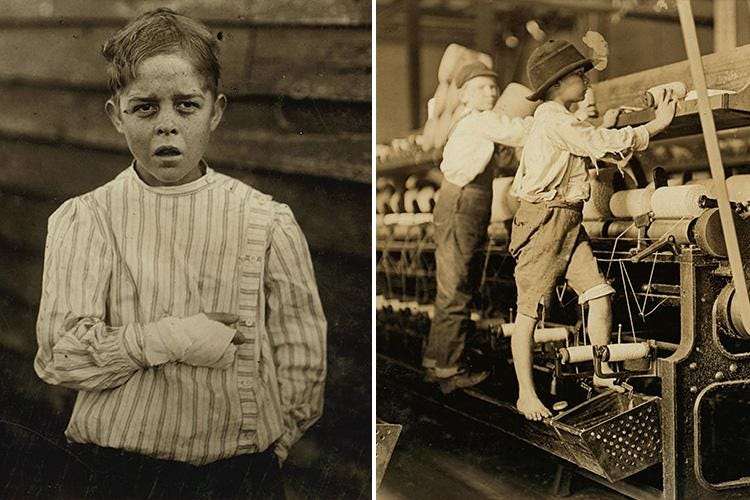

In human history (and in much of the world today) we were once here, small and large change is definitely possible, don’t let stupid doomers tell you otherwise.